May 27, 2026
By Elections and Redistricting Staff
Kagan, a nearly 20-year veteran of the General Assembly, is NCSL’s appointee to the U.S. Election Assistance Commission’s Board of Advisors.
After the 9/11 terrorist attacks, Cheryl Kagan decided that serving as a junior member in the Maryland House of Delegates was not the best use of her skills.
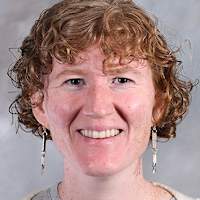
Despite having served eight years in the House and facing no opposition, she chose not to seek reelection. She spent 12 years out of office before deciding to run for a state Senate seat held by an incumbent with 36 years of experience in the General Assembly, 20 of them in the Senate.
“The Senate has been a big challenge, and it’s a great deal of fun with only 47 members in the body,” Kagan says.
She serves as vice chair on the Education, Energy and Environment Committee, which also oversees election policy. “They call the committee Triple E, but I call it E-Quad because we have elections, too.”
Her interest and expertise in election policy have led the committee chair to request her support on all things concerning election law.
Kagan spoke with NCSL about recent and future election legislation in Maryland, her role as NCSL’s appointee to the U.S. Election Assistance Commission’s Board of Advisors, bipartisan work on election administration, and working with local election officials.
What election bills did Maryland pass this year?
For the first time, we have put the words “ranked choice voting” in the law books. Two Republicans sponsored a bill on municipal elections, so we put in a section that the State Board of Elections must be ready if a municipality wants to use ranked choice voting. It requires them to be prepared with hardware and software that is RCV-compliant as many municipalities are looking at implementing RCV.
The Maryland Association of Election Officials, a bipartisan group of 24 counties, asked for increased security at the polls so we passed a law increasing the number of people permitted to intervene if there is a disruption, or someone who’s being threatening, or messing with voting equipment.
We expanded our faithless elector law to make sure that someone chosen as an elector in the Electoral College votes the way Maryland residents did or they are removed and replaced by a substitute elector.
We also passed a bill for simplified ballot language. I’ve been working on this for many years and with research from NCSL, we were able to analyze other states’ laws, both red states and blue states, to create a law that works for us. Additionally, we passed an emergency bill about postmarks. Maryland is one of 14 states that allows ballots received after Election Day to be counted as long as they are postmarked on or before Election Day. Federal action on the issue wants ballots to be received by close of business on Election Day, and that’s just not the way Maryland has done it, so we’re ready to handle federal races separately than state races, if it comes down to that.
In previous years, we passed bills allowing early processing—but not tabulating—of ballots. We’ve clarified recount processes, increased transparency on the State Board of Elections and increased protections for election workers.
What bills are you hoping to work on in the future?
We were really close to passing a constitutional amendment to require special elections to fill legislative vacancies and creating guardrails and transparency for exploratory campaign committees. I’ve sponsored these multiple times, and I’m confident that both bills will pass next year and be signed into law.
We’ve been wanting to reduce the number of days and lead time and increase access for unaffiliated voters to affiliate and vote a full ballot in primary elections. So, the question is whether unaffiliated voters will be able to affiliate with a party of their choosing, and the deadline to affiliate being moved to the end of early voting or Election Day. Right now, voters can only affiliate until 21 days before an election, so either is an improvement. I’ve worked on this for many years and the governor and the Senate president are now on board, so I am hopeful for next year.
Tell us about your role as NCSL’s representative to the EAC’s Board of Advisors?
The U.S. Election Assistance Commission is a small, nonpartisan federal agency that works with the National Institute of Standards and Technology, which is located in my district, to certify and make recommendations about hardware and software in elections. The EAC also develops materials to support voters abroad and voters with disabilities. There are two appointments by NCSL, one Republican and one Democrat, and I am proud to be working with Kansas Sen. Pat Proctor on the EAC board. We collaborate; we agree on some stuff and disagree on others. We both attended the EAC’s annual meeting this year in D.C., and we served as a voice on behalf of the state legislatures.
You’ve been a part of election policy discussions across the country. How are you thinking about election policy leading up to the 2026 midterm election versus previous election years?
Let me start by addressing the elephant in the room, which is that Maryland is dealing with an enormous snafu. There is a Minnesota-based vendor who sent out more than 400,000 mail-in ballots with a mistake, and some people—we’re not entirely clear about how many—got an inaccurate ballot. This has allowed an invitation for doubters of mail voting to say, “I told you so. This is why mail-in ballots can’t be trusted,” so the messaging has been challenging. It adds headaches and costs to our June primary.
The vendor totally owns the mistake, and they’re paying for all of the communication and replacement ballots, but it is a lot of extra work for election officials. So, I’ve been trying to help with messaging and reassuring people that everything is going to be fine. This is why messaging and contingency plans are so important because it is inevitable that things go wrong sometimes.
In what ways are you working across the aisle to create solutions in election administration?
One of the issues Democrats and Republicans can enthusiastically agree on is the sanctity and the importance of accurate voter rolls. Sen. Proctor and I agreed to work on a resolution for NCSL’s Summit. I’ve brought similar resolutions that have passed unanimously to the consent agenda (the list of issues debated during the annual business meeting) that have called on Congress to do something about voter rolls. Our constituents move within a county, within a state or across state lines, and unless we have updated information, our voter rolls are inaccurate.
Now, even if the rolls were accurate and perfectly updated, people die or move or change parties every single day. It’s an ever-changing database, but we have to do our best. I am a big fan of ERIC, the Electronic Registration Information Center, which was founded by seven states, including Maryland, and is a nonpartisan, nonprofit organization with 27 member states and D.C. to share information for voter list maintenance. People move from D.C. to Maryland to Virginia all of the time. Personally, I have lived in all three! So, we need to make sure our voter rolls are updated, and ERIC helps with that. I think it’s worth noting that ERIC members include bright red states like Alaska, Kentucky and South Carolina, and bright blue states like Connecticut, Rhode Island and Maryland.
One of the things bipartisan colleagues and I have discussed is how all of our databases can talk to each other. So, if there’s a Susan Smith, well there are a lot of Susan Smiths, so how do we determine which one lives in which state using information that we have in voter lists like phone numbers, Social Security numbers and addresses. So, we’re taking a slightly different approach to the resolution. Rather than calling on Congress to create some sort of entity, we are going to ask the EAC to do a study about what it would take for easier cross-state data sharing. How expensive would it be? Where would it be housed? How do we ensure privacy of personal information is guaranteed and not used for political purposes? I hope that the resolution will be unanimously approved that will ask the EAC to take a year or two to explore possibilities and create a report that we can consider to help keep our voter rolls as clean as possible.
How do you work with local election officials and what recommendations do you have for fellow legislators to build relationships with local officials?
In Maryland, there’s an association of all the county election directors. There’s an efficiency to being able to communicate with all 24 on any bill. The association includes both Democrat- and Republican-led counties, which is helpful.
Legislators need to learn how the process works before they try to modify it—it’s so important. And the facts matter, so when legislators aren’t clear about how something works, they can become educated when they see it. We passed risk-limiting audits in Maryland, and we worked closely with election officials to see how auditing works, how they assign jobs and train staff. Legislators can consider being part of a training or observing training to see how comprehensive everything is.
What is your favorite part about being a legislator?
My staff and some others call me the “GSD senator” because I get stuff done. I’ve had three people die in my district when (the nationwide emergency number) 911 failed, so I’ve spent the last 12 years working on Next Generation 911 and just passed a bill creating first-in-the-nation 311 using AI to lighten the load of our 911 centers. All of these things and more are so gratifying. My voice matters, and I am able to make a difference and help people by enacting policies that make a difference.
This interview has been edited for length and clarity.
 (410) 841-3134
 Cheryl.Kagan@senate.state.md.us